Yoga for Stress Relief: Which Styles Help, and What the Evidence Shows
Movement is the most reliably effective stress intervention there is, and yoga is the form that pairs it with attention. This covers which styles suit stress specifically, and what the evidence does and does not support.
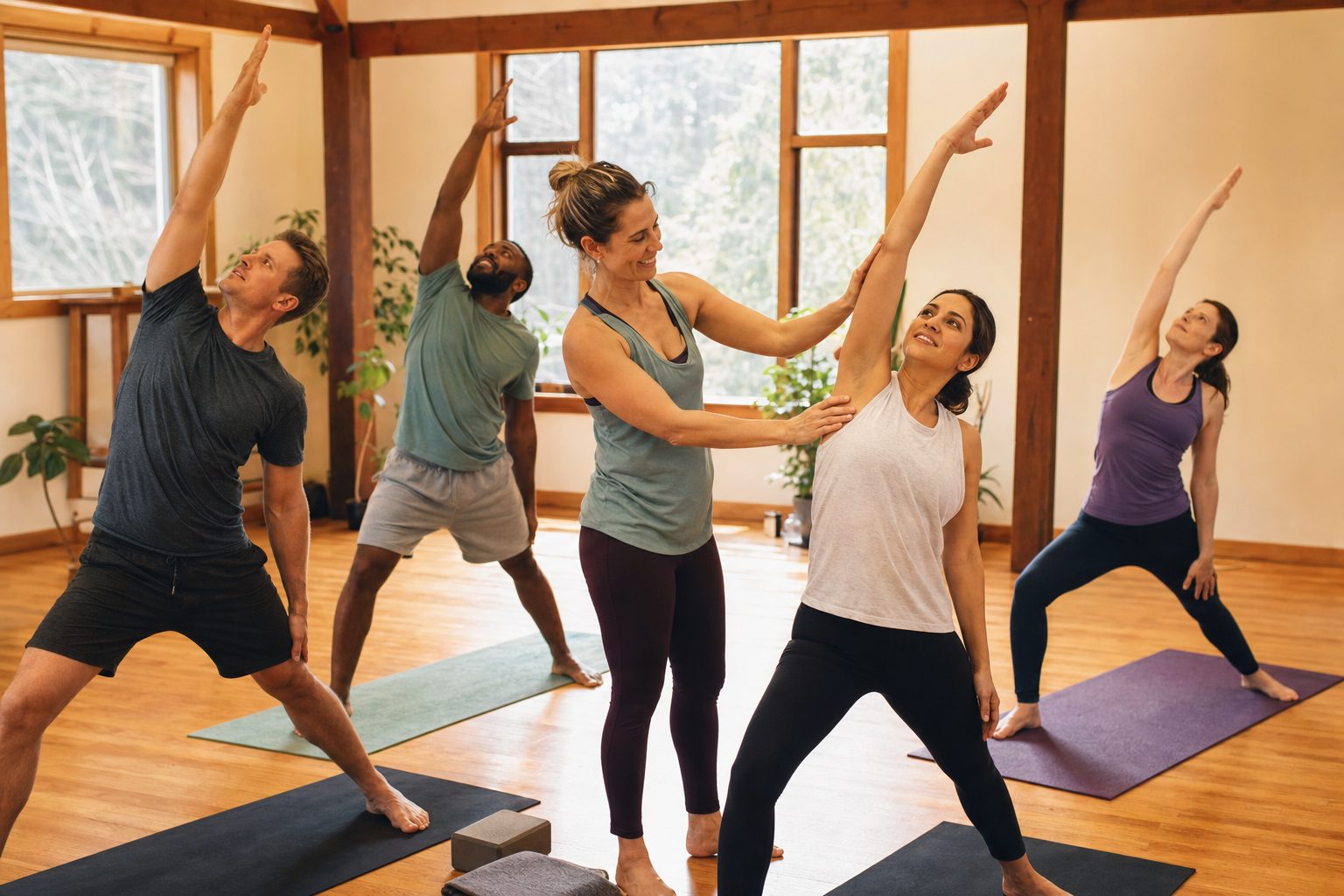
Yoga for stress relief occupies an awkward place: too often marketed as transformation, too often dismissed as stretching. What it actually offers is the combination of physical movement, breath regulation and sustained attention in one activity, and that combination is unusual.
Yoga for stress relief is best understood as that combination rather than as exercise. Movement on its own is among the most reliable stress interventions available. Adding attention to it is what distinguishes yoga from exercise.
Which Styles Suit Yoga for Stress Relief
Not all yoga is calming, and the styles most heavily marketed are frequently the least suitable for someone who is already depleted.
Restorative yoga uses a small number of shapes held for several minutes each, fully supported by bolsters, blankets and blocks. Almost nothing is being stretched; the point is that the body is held so completely that it can stop bracing. This is the most directly calming form on offer.
Yoga nidra dispenses with movement entirely. You lie down and are guided through the body and through simple imagery for twenty to forty minutes, staying just the right side of sleep. It is the most accessible practice on this page for anyone in pain, exhausted, or unable to move much.
Gentle hatha moves slowly through basic shapes with attention on breath and sensation. This is what MBSR courses teach as mindful movement, and it suits people who want to move but not to be pushed.
Vinyasa and flow link movement to breath continuously. Enjoyable, genuinely good exercise, and better suited to restlessness or low mood than to a nervous system that is already over-activated.
Hot, power and ashtanga styles are demanding physical training. Nothing wrong with them; simply not the tool for this job.
What the Practice Is Actually Doing
Three things, and they are separable. This is what distinguishes yoga for stress relief from a stretching routine.
The movement raises and then lowers physiological arousal, which is what exercise does for stress generally. The breathing is regulated throughout, and long slow exhalation biases the nervous system toward recovery. The attention component asks you to stay with sensation rather than narrating over it, which is the same skill any meditation trains.
That third element is why yoga and a stretching routine are not equivalent, and it is also the element most easily lost in a crowded, mirrored, fast-paced class.
What the Evidence Supports
The literature on yoga for stress and anxiety is reasonably large and shares the weaknesses of the wider field. Trials tend to be small, comparators are often waiting lists rather than active alternatives, and outcomes are self-reported.
Within those limits, the consistent findings are reductions in self-reported stress, anxiety and depressive symptoms, with effects broadly comparable to other active interventions rather than superior to them. Sleep quality improves in a good number of studies. Claims about specific physiological markers rest on smaller and less consistent work.
The honest summary matches the rest of this site: it helps, moderately, about as much as other things that also help.
Walking and Ordinary Movement
Structured practice is not the only route, and for many people it is not the realistic one.
Regular walking has a stronger evidence base for mood and stress than most branded interventions, costs nothing, and is easy to sustain. Walking outdoors appears to add something beyond the movement itself, though separating the exercise from the daylight, the green space and the break from screens is difficult and the individual contributions are not well established.
The practical version: a twenty to thirty minute walk most days, ideally outside, ideally without a podcast for part of it. That is a serious intervention despite being unglamorous.
Starting Without a Class
If a studio is not accessible or appealing:
- Yoga nidra works entirely from a recording and needs only a floor.
- Ten minutes of gentle movement in the morning, following any competent guided session, is enough to establish the habit.
- A short restorative sequence before bed — legs up the wall, a supported forward fold, a few minutes lying with a bolster under the knees — pairs well with the wind-down routine.
The commonest mistake is starting with a sixty-minute class three times a week and stopping within a month. Ten minutes most days is the version that survives.